
Hearts - Card Game Classic
FIOGONIA LIMITEDCard
4.55.97K Reviews
- Version
- 2.3.3
- Installs
- 1.00M
- Age Rating
- Everyone
Screenshots
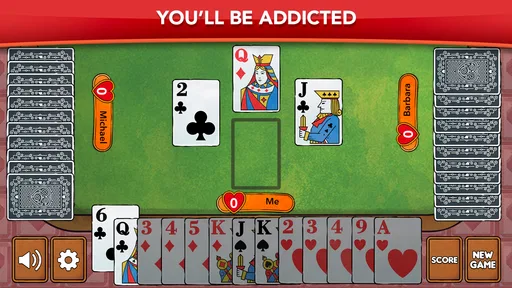
Our Review of Hearts - Card Game Classic
 Analysis by Appyee
I have always liked Hearts because it rewards patience more than flashy play. A good hand is not only about collecting points; it is about reading the table, remembering what has already been played, and deciding when it is safer to lose a trick than to win one. Hearts - Card Game Classic takes that familiar idea and turns it into a convenient card game for Android, with both online and offline play at its center. After spending time with it, I see it as a practical choice for short sessions, casual practice, and anyone who wants a traditional Hearts table without needing a physical deck.
The game comes from FIOGONIA LIMITED and is free to install. It belongs squarely in the classic card-game space rather than trying to reinvent Hearts with a large collection of unrelated modes. That focus is one of its strengths: you can open it when you have a few minutes, play a hand, and stop without committing to a long campaign or complicated progression system.
It is also a well-established title. The game was released on October 4, 2018, and the current version is 2.3.3. Its average rating is 4.5 from roughly 19 thousand ratings, while the app has passed 1 million installs. Those figures suggest that it has found a steady audience, but they do not change the most important question: whether its particular style of Hearts suits the way you want to play.
How the current version feels in everyday play
I find the current version most useful when I treat each hand as a small practice routine rather than simply racing to the next deal. Before passing, I check which cards could force me to take a trick; afterward, I watch which suits players cannot follow. That steady approach makes short offline sessions more rewarding and sets up a closer look at the choices worth checking before play.
A familiar Hearts table without unnecessary clutter
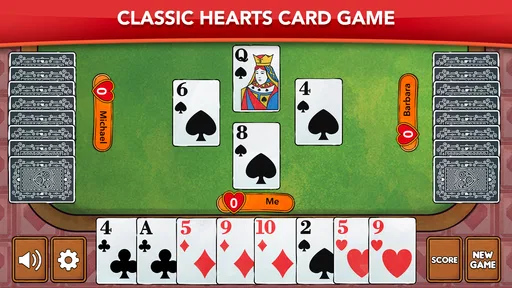
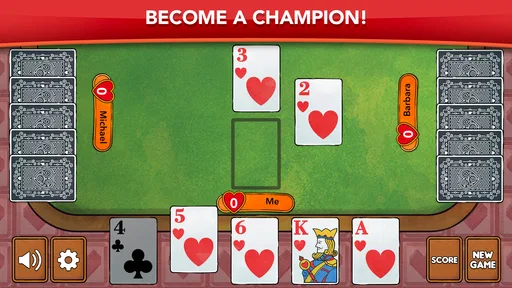
My first impression is that the appeal comes from simplicity. Hearts is already a game with a clear objective, and this app does not need to bury that objective under a complicated interface. The useful rhythm is easy to understand: inspect the hand, make the pass, follow suit when required, and try to avoid taking unwanted hearts or the queen of spades. For a returning player, the basic flow feels immediately recognizable.
That makes it suitable for a quick evening game or a quiet break during the day. I can imagine opening it while waiting for an appointment, playing a few hands, and closing it without feeling that I have abandoned a larger task. Offline access is particularly useful here because it makes the game less dependent on a stable connection. If you mainly want a dependable solo card game, that is more valuable than a long list of decorative extras.
The free entry point also lowers the risk of trying it. You do not have to buy a physical deck, find three other people, or arrange a shared time before discovering whether the app’s pace works for you. The Everyone age rating makes it appropriate for a broad audience, including families looking for a straightforward card game rather than an intense competitive title.
Why Hearts still rewards careful decisions
The best part of this game is not the act of tapping a card. It is the small chain of decisions behind every trick. When I look at a hand with several cards in one suit, I have to think about whether that makes me vulnerable to being forced to take tricks later. A short suit can be useful, but only if I can shed it at the right moment. Those choices give the app more depth than its simple presentation might suggest.
New players should pay attention to the difference between winning a trick and controlling a trick. In many card games, taking the lead feels positive. In Hearts, it can be dangerous. If I win with a high card, I may be forced to lead a suit that gives another player an easy way to unload points. The app is a good environment for learning that change in mindset because the consequences become visible from hand to hand.
One practical habit I recommend is to remember which suits opponents appear unable to follow. Once a player is void in a suit, leading that suit can create a serious problem for someone else, especially if hearts have already been opened. This is the kind of observation that separates a merely playable hand from a thoughtful one, and it remains useful whether I am playing offline or against online opponents.
Offline play is more than a convenience
The offline option changes who can realistically enjoy the game. A connection-based card title can become frustrating when a signal drops or when matchmaking takes longer than the game itself. With this version, I can use it as a private practice table. That is helpful when I want to work on passing decisions, learn to count suits, or simply play without the pressure of another person waiting for my move.
Offline play is also a good fit for travel. On a train, in a waiting room, or during a flight, a traditional card game is easier to return to than an action game that depends on constant attention. I can pause mentally between hands and resume when I am ready. Players who want social competition all the time may find this limited, but for a flexible solo routine it is a meaningful advantage.
Online play changes the pace and the pressure
Online play gives Hearts a different character. Against other people, the value of a risky choice is harder to predict because human players may notice patterns that computer opponents do not. A pass that seems harmless in a practice game can become a signal at a live table. I enjoy that extra uncertainty, but it also means online sessions are better when I have enough time to concentrate.
Anyone considering the online side should think about consistency. Hearts is not a game where every hand feels equally dramatic, and a patient player may prefer making small defensive decisions over chasing spectacular reversals. If you want rapid action, constant rewards, or a game that offers a new visual surprise every few minutes, this is probably not the right category for you. Its satisfaction comes from gradual improvement and better judgment.
What has changed over the product’s life
The title has moved through several years of availability and now sits at version 2.3.3. I see that as evidence of an ongoing product rather than a one-off release left untouched after launch. Still, a version number by itself is not a promise that every part of the experience has been transformed. The important takeaway for existing users is that the app remains available in a current form, while the core attraction is still the same classic Hearts structure.
That continuity matters. Players who learned the game through an earlier version are unlikely to need to relearn its basic identity. The evolution appears best understood as maintenance and refinement around a familiar card table, not a dramatic shift into a different genre. I would rather have that stability than see a traditional game overloaded with systems that distract from the cards.
For someone installing it today, the current version is the sensible starting point. For someone returning after a long break, it is worth approaching it as the same kind of Hearts experience with a more recent build, rather than expecting a completely new game. That distinction keeps expectations realistic and makes it easier to judge the app on what it actually does well.
Small habits that improve the experience
My first useful tip is to slow down during the passing phase. Passing is not just a chance to remove a high card. It is an opportunity to shape the hand you will have when the first trick begins. I usually look for cards that could force me to win later, then consider whether passing them creates a different weakness. Removing the queen of spades can feel attractive, but the right choice depends on the rest of the hand and on the direction of the pass.
My second tip is to treat low cards as tools, not automatically as safe cards. A low card can help me avoid a trick, but it may also leave me unable to regain control when I need to. Before playing it, I ask which player is likely to win the trick and who will lead next. That simple question prevents many careless moves, especially when the table has already become dangerous.
My third tip is to use offline sessions as deliberate training rather than mindless repetition. I might play one hand while focusing only on suit distribution, then another while tracking who appears void. By giving each hand a small purpose, I get more value from short sessions and improve faster than I would by tapping through cards without thinking.
A fourth useful approach is to separate results from decisions. Hearts includes luck, so a sensible play can still produce a poor outcome. I try to review the moment that created the problem instead of judging the entire hand by its final score. That attitude is especially important for new players, because the app’s simple format can make losses feel more personal than they really are.
Where the free model fits
The game is free, but it includes in-app purchases ranging from $0.99 to $29.99 per item. That is relevant for anyone who prefers a completely unrestricted free experience. I would approach the app as free to try, then pay attention to how any optional purchases fit my own habits before spending. A casual player who only wants occasional offline hands may have a different view from someone who plays every day.
The purchase range also means parents should keep the device’s purchase controls in mind, even though the content rating is Everyone. The age rating describes the game’s general suitability, while purchases are a separate practical consideration. For a family tablet, I would make sure the account settings match who is using the device.
Compared with a physical deck, the app wins on convenience and solo availability. A real deck offers social interaction, flexible house rules, and no battery concerns, but it requires other players and a suitable surface. Compared with a generic solitaire game, Hearts gives me more interaction because every opponent’s choice affects the future shape of the hand. Compared with a highly competitive multiplayer card title, it is calmer and more traditional, though it may feel less exciting for players who want constant progression or elaborate presentation.
Who will enjoy it, and who should skip it
I would recommend this game to people who already know Hearts, players learning the rules for the first time, and anyone who wants a classic card game that works in both connected and disconnected situations. It is particularly good for a person who enjoys quiet concentration, repeated short sessions, and the satisfaction of noticing a mistake less often over time.
It is also a useful choice for someone who wants to practice before playing Hearts with friends or relatives. Offline hands let me test basic ideas without slowing down a real table. Once those ideas feel natural, online play can add the unpredictability that computer opponents cannot fully reproduce.
I would skip it if my main goal were a rich role-playing system, a story campaign, animated spectacle, or a large collection of unrelated card modes. This is not where I would look for a constantly changing entertainment package. I would also choose a physical deck instead if the important part of the experience were talking around a table with friends. The app can reproduce the game, but it cannot replace that social setting.
Remaining friction and realistic expectations
The biggest limitation is also the game’s defining choice: it stays focused on Hearts. That focus is welcome when I want the classic rules, but it can feel narrow after many repeated sessions. Players who need frequent novelty may eventually want another card app alongside it rather than relying on this one for all their gaming time.
There is also a difference between practicing against offline opponents and playing online. Offline play is dependable and convenient, but it cannot provide the same uncertainty as a human table. Online play is more socially engaging, yet it asks for more attention and may not suit a player who wants a completely private, interruption-friendly session. I would choose between them based on my mood rather than treating one as a replacement for the other.
As with any free game that offers purchases, I would also keep an eye on how the optional spending fits into the experience. The game’s core appeal does not require me to treat it like a large ongoing service, but frequent players should make deliberate choices instead of assuming every available purchase is necessary.
What I would watch as a returning player
If I were checking back after using an older build, I would pay attention to whether the current version continues to preserve the quick start and reliable offline rhythm that make the app useful. I would also watch how comfortable the online experience feels over longer sessions, because a card game’s value depends heavily on whether it remains easy to return to.
I would not expect version 2.3.3 to change the basic nature of Hearts. The more important question is whether the surrounding experience continues to support the traditional game without adding friction. For existing users, continuity is a benefit; for new users, it means the decision is straightforward: install it if the classic rules and flexible play options are what you want.
My final recommendation
After using it as both a quick pastime and a practice table, I think Hearts - Card Game Classic succeeds because it understands the appeal of the original game. It gives me a familiar structure, offline flexibility, and an online option when I want more uncertainty. The experience is not designed to overwhelm me with content, and that restraint is exactly why it works for short, repeatable sessions.
Its limitations are clear enough to make the choice easy. This is not a substitute for a lively face-to-face game, and it will not satisfy someone searching for constant visual variety or a deep progression system. But if I wanted to recommend one accessible Hearts app to a friend who values convenience and traditional play, I would put this one on the shortlist.
My advice is simple: try it for the offline table first, then move online when you are comfortable with passing, suit tracking, and avoiding unwanted control of the trick. The free download makes that trial easy, and the game’s Everyone rating keeps it approachable. For patient card players, that combination makes it a dependable companion rather than a disposable time-filler.
Verdict
Strengths of Hearts - Card Game Classic
- Simple rules make it easy for beginners to start playing.
- Offline mode lets you enjoy matches without an internet connection.
- Short rounds are convenient for quick gaming sessions.
- Multiple difficulty levels provide a gradual challenge.
- Clean card visuals make suits and values easy to recognize.
Limitations of Hearts - Card Game Classic
- Computer opponents may feel predictable after extended play.
- Ads can interrupt the experience in the free version.
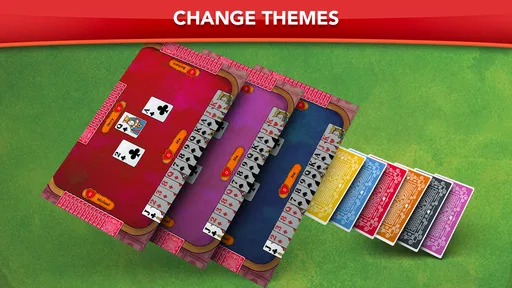
- Limited customization may disappoint players wanting more themes.
- No real-time multiplayer reduces the competitive appeal.
- Luck can strongly influence results despite careful strategy.
Other Releases by FIOGONIA LIMITED
View All
Dominos Game Classic Dominoes
Board4.7

Word Galaxy Challenge
Word4.7

Spades - Classic Card Game
Card4.7

Yazy the yatzy dice game
Board4.7
Similar Picks in This Category
View All
Solitaire - Classic Card Games
MobilityWare4.6

UNO!™
Mattel163 Limited4.3

Spider Solitaire: Card Games
MobilityWare4.6

Solitaire.com - Classic Cards
Tripledot Studios Limited4.7

Plants vs. Zombies™ Heroes
ELECTRONIC ARTS4.1

Hearthstone
Blizzard Entertainment, Inc.4.1
Frequently Asked Questions
What is Hearts - Card Game Classic?
Hearts - Card Game Classic is a digital version of the well-known trick-taking card game for mobile devices. It lets you play against computer-controlled opponents in traditional Hearts matches, where the aim is usually to finish with the lowest score. The app focuses on classic rules, straightforward controls, and short rounds that are convenient for casual play.
How do you play Hearts in this app?
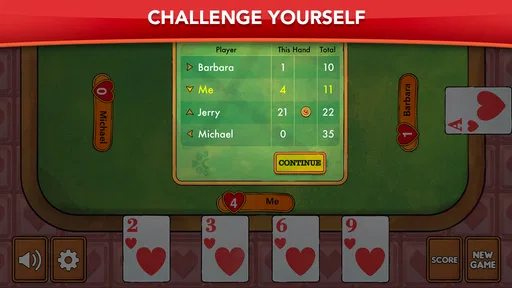
At the beginning of each round, cards are dealt to the players and cards may be passed according to the selected game rules. Players must generally follow the suit led whenever possible, while avoiding unwanted Hearts and the Queen of Spades. Each Heart normally adds penalty points, and the Queen of Spades adds a larger penalty. The player with the lowest total score at the end wins.
Can beginners easily learn Hearts - Card Game Classic?
Yes. The game is relatively accessible for newcomers because each turn is based on simple card-play rules. However, understanding when to pass high cards, when to take a trick, and how to manage the Queen of Spades requires some practice. New players should begin by observing which suits have already been played and avoiding penalty cards until they understand the flow of a round.
Does Hearts - Card Game Classic work offline?
The classic format is generally designed for playing against computer opponents, making it suitable for moments when you do not have a reliable internet connection. Offline availability can depend on the specific version and device configuration, so it is worth checking the app’s store description before downloading. If online features are included, they may require an active connection.
Is Hearts - Card Game Classic free to download and play?
The app may be available as a free download, although the exact business model can vary between Android and iOS versions. Some editions may include advertising, optional purchases, or premium features such as additional themes, difficulty levels, or customization options. Before installing, review the store listing for current pricing, advertisements, in-app purchases, and supported devices.
Play our best games!


